Yelly Writes

Embracing paradox and lessons from Netflix’s Off Campus

I’ve just finished binge watching Off Campus. Yes, yes, I will be a forever card carrying girly girl and I do love my rom coms. I know some of the romcoms don’t necessarily reflect real-life relationship scenarios and some people will say that most of the relationships in movies or TV series are dysfunctional. But sometimes romantic comedies are just that — a showcase of romance and a little something-something to make you giggle. You can’t always take life too seriously!

Okay SPOILER ALERT. What I did love about Off Campus was the cerebral bit (that’s what I’m calling it in my head. Deal with it!). There was a discussion of Kierkegaard’s two contrasting truths, how the objective and subjective truths can coexist at the same time. I loved how the concept was explained. It was like an on-screen CliffsNotes on philosophy. I can’t believe Netflix had a real teaching moment!

A swan can look serene on the surface but furiously paddling below.

You can fall apart and still be full of wonder. Both are true at once. — Unknown

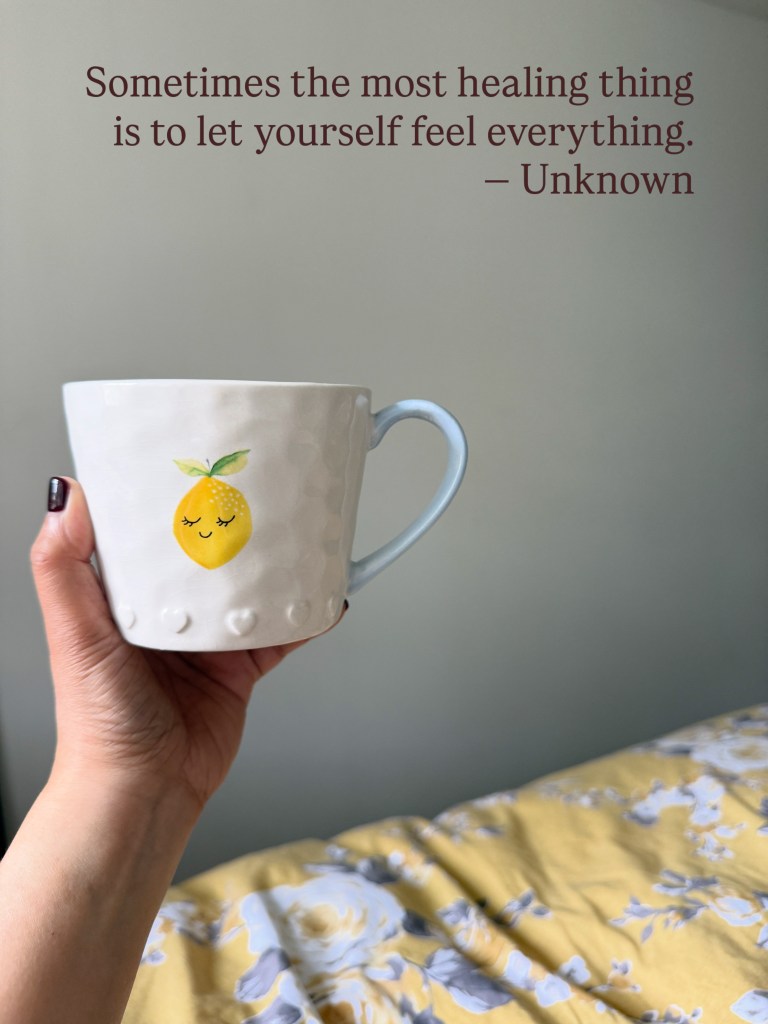
We can hold space for two truths all at the same time. Humans are a wonderful paradox and have this amazing capacity for contradiction: we can be competitive but kind, we can act in complete defiance of our beliefs and yet live lives that embody our values, we can be completely heartbroken and yet laugh out loud while watching a rom-com movie, you can love someone and yet know that you can’t be in that space anymore. We don’t have to live in single-box identities.

There are no hard and fast rules when you are in the recovery road. You don’t have to be serious and all about the learning. You can laugh and find joy when it presents itself. Learning to deal with the trauma and also notice the glimmers can be simultaneous when you are healing.

Yelly Writes

The Energy Paradox: Why Change is Essential for Growth

@yellywelly

Change happens when the desire to grow becomes greater than the desire to stay comfortable. — Tony Robbins

What is comfortable is predictable and familiar. It is human nature to seek the familiar because it is safe and helps conserve energy. As humans, we are hardwired to take the path of least resistance because it is assured survival. Our brains, roughly take up just 2% of our body weight but consume about 20% of our energy. Our brains naturally seek what is comfortable to save energy consumption because too much expending of energy will lead to burnout.

The paradox is for us to gain more energy, we have to expend energy. We have to push and stretch our boundaries. Staying in our safety zones, will, in the long run, keep us stuck in less-than-ideal circumstances. It can keep us comfortable in situations that are no longer good for us. Because it is familiar, sometimes we allow ourselves to stay in painful places because we know how to manoeuvre in these spaces. We avoid the unfamiliar peace and stay in the familiar hell because we already know how to survive it. I know this because I’m living it.

The trick is, apparently, small, consistent changes. I say apparently because I am a work in progress. I am anxious and uncertain, but I know something has to change. I know that in order to recover, in order to heal, I need for there to be real change. I know I am misreading the anxiety I’m feeling. I’m anxious because there has been so much upheaval in my life. But I need to reframe this in my mind. The upheaval is good. It is necessary for me to change. I just need to break this down into small, manageable chunks.

I’m sitting in the discomfort. I know it signals change. I need to stay the course. I will get there. I need to stop putting things off (because I’m terrified of the change it’ll demand from me). But I do know I need to figure out how to move forward…and soon

Yelly Writes

The Power of Your Inner Circle

Your inner circle provides the energy you unconsciously digest. You need to be selective about who you let in because they must see you — your quirks, your weaknesses, your strengths; they mustn’t judge you — even when they don’t understand, notice whether their knee-jerk reaction is to offer advice to fix you (even if they don’t have the capacity or experience); they must hold space for you — that they are with you in the easy and difficult moments, that they know that sometimes you just need them to hold space for you (even when you are down); they must have the patience and presence to choose the time and utterance to tell you the uncomfortable truths that you need to hear.

You are your environment. Your environment provides the air you breathe, the nutrition you absorb, the information you digest. Remember, crap in, crap out.

Yelly Writes

Embracing our choices

Every choice you make has a consequence. Choose wisely and choose often. — Unknown

We’re encouraged to choose, to choose wisely, to choose what’s best, what feels right, what feels good. Eventually, following all the choosing, we’ll need to face the consequences of our actions. No one actually prepares you for how soul-destroying and heart-wrenching it can be when it all goes wrong, and you look at how your choices have impacted your life, how you’re going to pick up the pieces, if the choices you made don’t necessarily lead to the life you thought it would lead to.

What do you do? Where do you go from here? How do you manage? Then the worrying wheel starts turning. Then the anxiety starts climbing. Then the panic starts choking you. Your brain starts screaming: What the hell have you done?!?

The first thing you do is you stand still. The need to move will probably feel inescapable. But you need to keep still. You need to breathe. You take a breath to settle and stop the spiralling and spinning.

Then you need to forgive yourself for the decisions you made. They were choices you made with the capacity and knowledge available to you at the time. You are where you are now, and it is what it is. Settle and learn. See the lessons.

After that, you accept responsibility for your actions, but also accept that you did what you could with the emotional capacity, wisdom, and life experience you had at the time. You were learning, processing, synthesising and executing in real-time. Stay still long enough to learn the lessons. Settle so that the wisdom and evolution bakes in and takes hold.

Then map out where you go from here, armed with lessons learned, kindness for yourself. You didn’t know then what you know now. And that’s okay. Now you can choose better.

Yelly Writes

Shifting Seasons of Loss: Grief, Waves and Personal Growth

Some days carry grief quietly. Tonight, let it speak, then let it rest. — Unknown

I’ve put off dealing with a lot of things – the inevitable grief that comes from losing both parents whom I love very dearly in a span of 4 years, the end of relationships that I thought would stand the test of time and personal growth, accepting burnout, and the need to step back from toxic environments. But my body and my mind had other plans. They both demanded that I stop and step back.

The Universe also conspired to give me the time to actually start dealing with everything. Things fell into place, and I had the time and space. Also, it was deal with things or basically unravel. I was deathly afraid of unravelling in public, and there were times when it was touch and go. I had to deal with what was going on in my head, my heart, my body, and my soul, or else I really would lose it in a way that I would find it hard to recover from.

One of the things I had to sit down and deal with was the unexpressed grief I’d been carrying with me for so long. It was eating away at me. I needed to sit down, open that box, and look inside.

Grief is never linear, and the process is not straightforward. There are peaks and troughs in the rhythms of grief. There are days when it hums quietly, almost unnoticeable in the background. There are days when it feels like it’s a loud, thundering wildebeest stampede, coming to trample you. Everyone’s experience of grief is different because we move through life differently. We weave through the stages of grief according to our own capacity and capability. And however we do that is okay. It is our individual journey.

Sometimes it will feel like you’re moving back and forth — rebuilding might mean you’re moving in reverse, like you’re facing an identity crisis before you reach a point of understanding. Sometimes you need a wave to crash over you and completely destabilise you so that you can reach a point where you’re stabilised and grounded, because you have a deeper understanding of yourself and what you’re going through.

It’s okay to wail and rail and to let out your grief. That’s part of it. Let it out. Let it shout. Express it. Then let yourself rest and recover.

Yelly Writes

Positive is as positive does

Positive thinking isn’t ignoring the bad things happening to you or around you. It’s seeing it, accepting that, yes, it’s bad, but looking at what’s happening and knowing you will get through it. Maybe wading through it will be easy, most times it will be difficult, or the very least uncomfortable. But telling yourself to just get through it makes you more resilient.

At the end of the day, resilience in challenging situations is the most important skill. The ability to sit in the discomfort of it all helps more than you know.

Yelly Writes

Choosing to sit

When you choose to be positive, you choose your future. — Unknown

Woke up way too early again on a Saturday morning. I have been working through a lot of personal stuff and the thoughts are noisy and intrusive. I’ve always loved Brené Brown’s advice to sit in the discomfort of one’s vulnerability, because exposure to discomfort builds tolerance and resilience. So I’m choosing to sit with the head full of noise. Picking out the strands that I can pick out will help, and telling myself those that I can’t can stay jumbled. They’re for sorting out another day.

@yellywelly

We’re told these days that we can choose our future, that we can control what happens to us. If we manifest using specific words, if we behave a certain way, if we one day decide to radically change our lives in pursuit of the future we want, if we eat less/more of certain foods…it all boils down to controlling something we haven’t even experienced yet.

The only thing we can control is how we react to our environment. We react to our environment through small daily actions that become routine and habitual. When things become routine, they become predictable. This is how you can predict the future.

“But predictable is boring!” I’m sure a lot of you will say. And to that I say, NO IT IS NOT! When we habitually strive to find joy, when we routinely try to look for the positive, it becomes second nature, it becomes part of who we are, and that’s how we bake positivity and hope into our future. When we choose to view everything as potentially filled with light and joy, we choose a future filled with exactly that. The future will always be an unknown quantity, but if we sit with the knowledge that, whatever it is, there will always be hope that it could be shining, shimmering, splendid, that is the exciting part of it all.

What small thing will you do today that your future self will thank you for?

Yelly Writes

Embracing Enough

The opposite of scarcity is not abundance. It is enough. — Brené Brown

I am exhausted.

The movement, the jockeying for position everywhere, the perpetual motion towards perfection (physically, psychologically, financially…), we’ve been led to believe that that particular brass ring is reachable. But is it really? There is self-improvement and there is getting in that hamster wheel thinking you need to get to 100%. We have been programmed to work harder, accumulate more, to consume more, to be more attractive, to be healthier, to climb higher, to be more aware, to be better, to be more, to constantly raise the bar…

But what if what we have right now is enough? What if accepting that when our needs are met, when we can be happy, when we feel contentment, when things are enough, when what we have is sufficient is what we should be doing? What if all we need to do is understand that what we have to actually work towards is the appreciation of what we have, that that is enough? 

What if what we have, what we are, what if it’s ENOUGH? 

I am going to try to sit with that this weekend.

Yelly Writes

The Procrastination Monster

I’ve heard it said so many times and in a multitude of iterations: If you have something to do, do it. Do it now. Before fear or self-doubt takes hold!

I’m a planner…and a procrastinator. I hide the procrastination behind beautifully engineered plans that are, eventually, expertly executed. My mom was also famously a don’t-do-until-due person. She did everything flawlessly too, but under great haste. I always used to joke that my procrastination was genetic.

One day, I read somewhere that procrastination was fear of failure in disguise. And THAT was a lightbulb moment. It felt like a string of fairly lights started twinkling! In my case, it was most certainly the most lethal of combinations: my need for perfection and my fear of failure. I was putting off doing things because my nervous system saw the situation or task as a threat — because in my head I was going to fail spectacularly, people would l see me as a fraud, and I would again, get tangible proof that I am inept, incapable, and a complete impostor.

I am learning to stop listening to the Negative Nancy in my head. Because I know what I can do and I am actually really capable. I am learning to face the wall of anxiety and tackle the paralysis. I am:

  • 🏷️ Naming it: Fear of failure / missing the mark
  • 🔨 Breaking it down into manageable tasks
  • ⏱️ Giving myself 10/15 mins to accomplish tasks
  • 🧘🏻‍♀️Forcing myself to breathe through the anxiety.

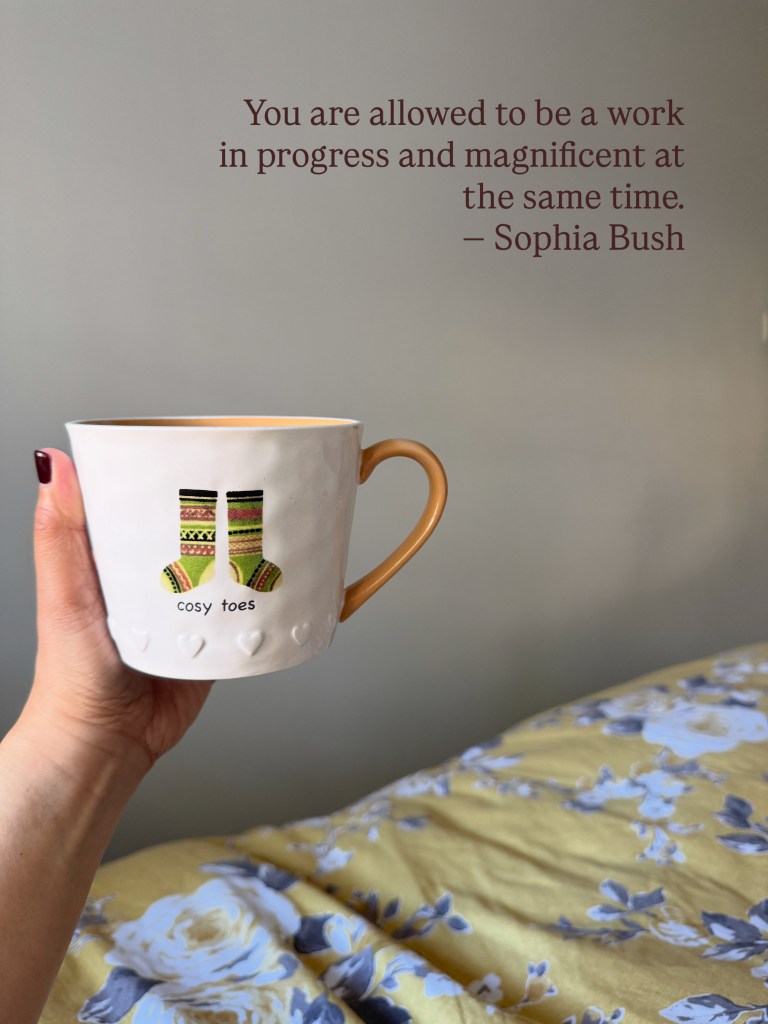
I am a work in progress. But I am naming my imperfections. I am naming my fears. I am facing them. Slowly. Surely. One by one.