Yelly Eats

Ube!

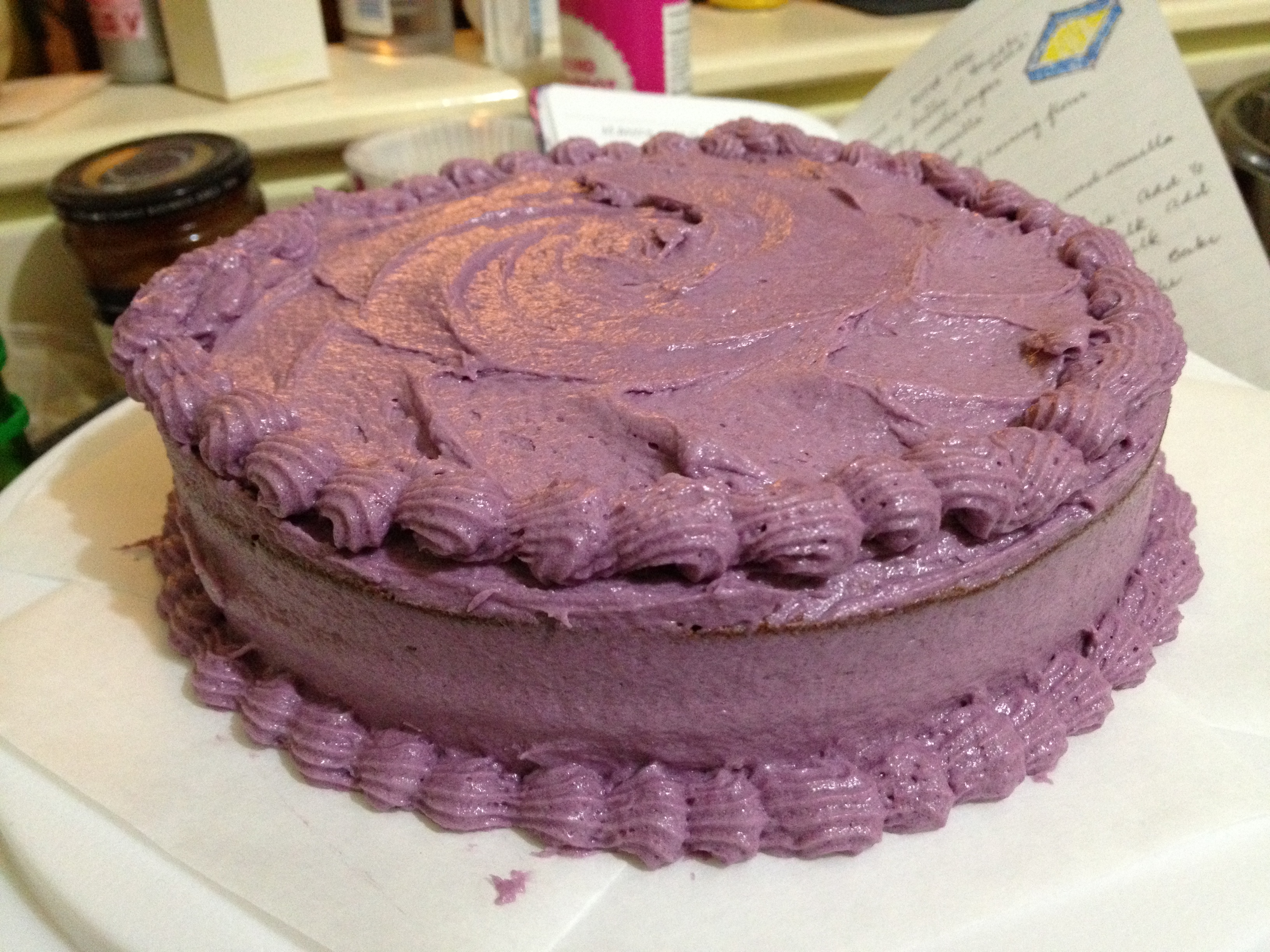
I’m working on an ube sponge cake recipe because I miss ube cake from the Philippines.  I particularly love the ube cake from Red Ribbon.  But because Red Ribbon hasn’t made it to this side of the Atlantic, I will just have to learn to make the cake myself.  I’ve always said that necessity is the mother of invention and it is absolutely necessary for me to have my ube cake fix!  I haven’t had a slice of ube cake since…I can’t remember.  It must have been over 5 years!

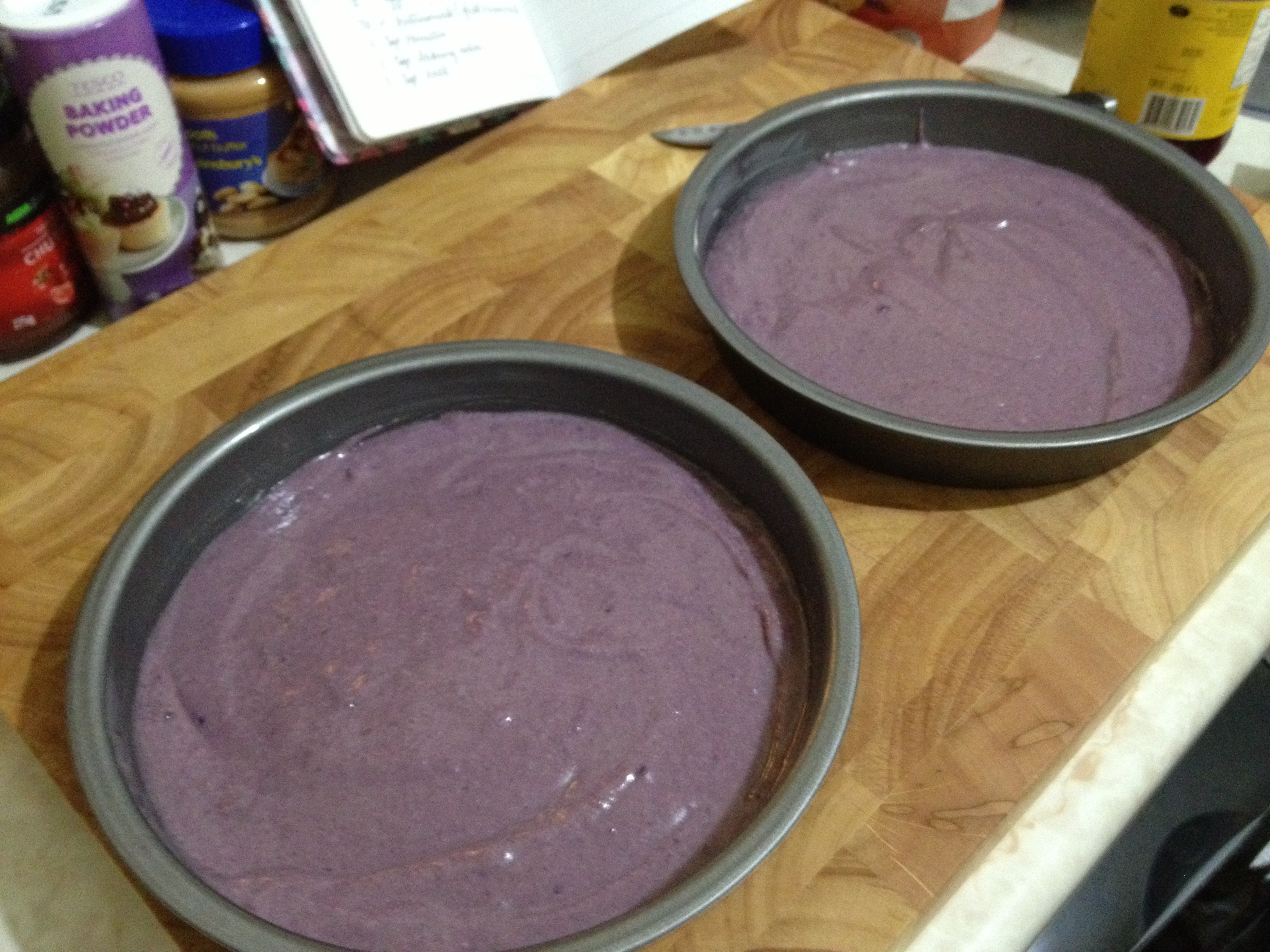
My first attempt seemed to go down pretty well.  The colour was great and the flavour was absolutely there.  The cake was spongy and light.

purple yam cake batter

I will have to make it again maybe next week (after the cake that’s currently residing in my cake box has been consumed).  I’ve got recipe improvements in my head already.  I’m sure the oriental store in Chelmsford will enjoy the fact that I’ll be buying another jar of ube jam next week!  Watch this space for the recipe soon!

Ube cake at last!


Yelly Eats

Food for the gods, a Filipino tradition

I grew up enjoying food for the gods during Christmas and I always thought that it would be such a complicated recipe because, well, at the time, you couldn’t exactly buy the ingredients from your local supermarket.  It was such a treat when people gave us a box of these lovely sweet treats and I remember when we were handed one each after dinner so that we could make it last.  This was before my Lolo Ani opened a bakery and started baking these in huge quantities and we had food for the gods on tap every Christmas!

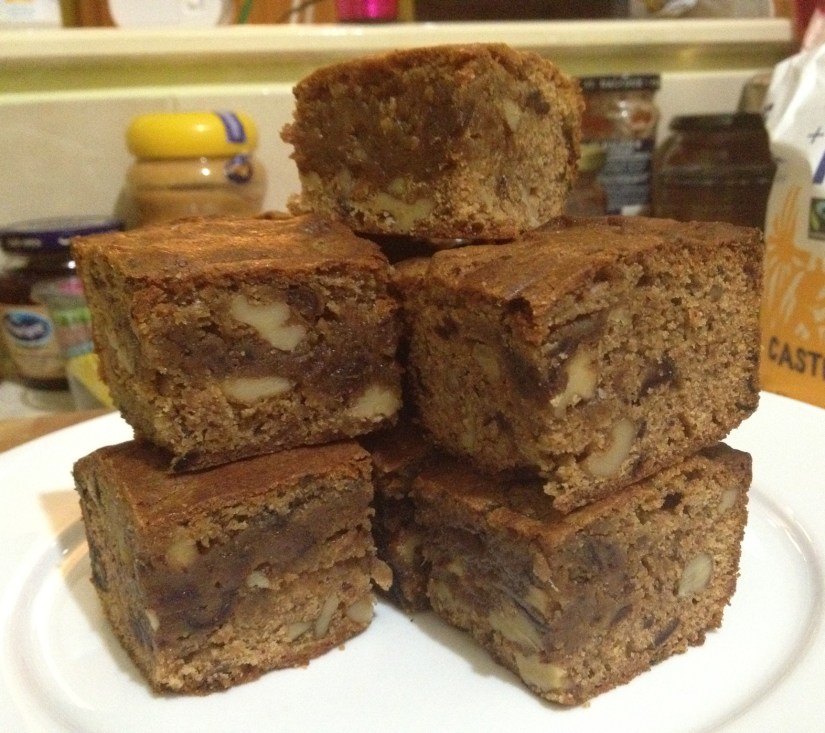
Food for the gods are really date and walnut bars.  I don’t really know why they’re called food for the gods, maybe because they are scrummy and so wonderfully to eat!  I’ve tried several recipes and after a few tweaking exercises, I may have cracked it.

I brought this to work today so that I could share it with my officemates.  I am merely continuing the Filipino tradition of giving away food for the gods at Christmas!

Here’s my recipe:Food for the gods aka date bars

Ingredients:

150g all purpose flour
1 teaspoon baking powder
1/4 teaspoon salt
2 eggs
225g brown sugar
125g unsalted butter, melted
150g walnuts, coarsely chopped
150g dates, coarsley chopped

Directions:

  1. Preheat the oven to 175°C.
  2. In a mixing bowl, mix flour, salt and baking powder together with a balloon whisk until well combined.  Add walnuts and dates and mix with a spatula until the dates and nuts are well-covered with the flour mixture and well-distributed within the flour mixture.  Doing this will ensure that the dates and the nuts do not sink to the bottom of the mixture.
  3. In a mixing bowl (am using a free standing mixer but you can also do this by hand with a balloon whisk), combine melted butter and sugars and beat until the mixture is smooth and almost creamy.  Add the eggs one at a time, making sure that the egg is well-combined before adding the next one.  Add the flour-date-nut mixture in quarters.  Mix until everything is well-distributed and you cannot see any flour.
  4. Spread mixture in a greased 17.5cm x 26.5cm (or thereabouts) pan lined with baking parchment (I learned that lining the baking pan with parchment is good because it makes it easy to release the cake from the pan) and bake for 30-35 minutes or until a toothpick inserted comes out clean.  This recipe makes up to 24 squares.
Yelly Eats

Pan de sal at last!

I’ve been looking for a pan de sal recipe that I can work with and I have think I may have found it.

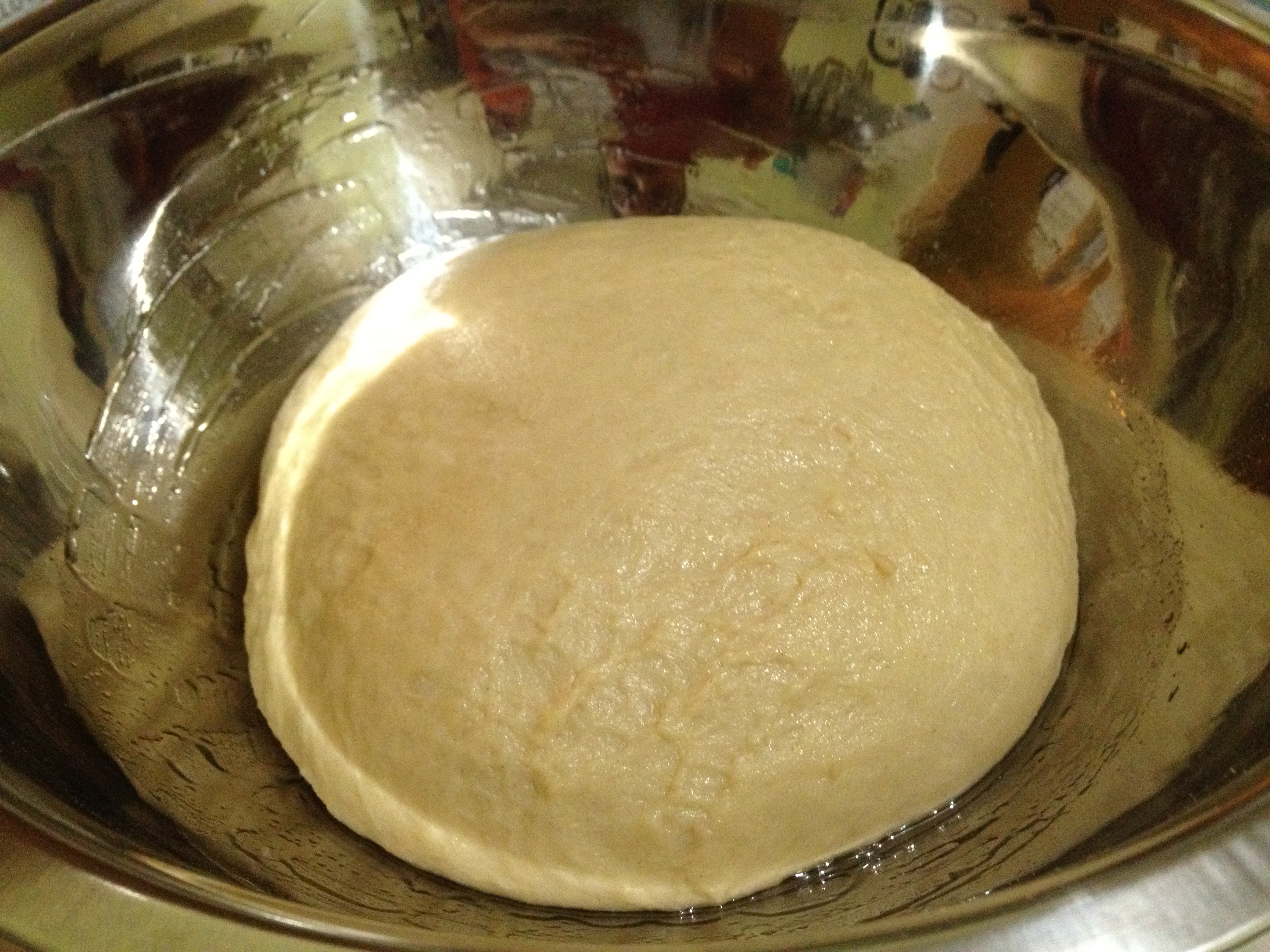
Pan de sal is a Filipino bread roll that is sold at very nearly every corner bakery shop in the Philippines.  I’ve missed it so much that I’ve told myself it’s necessary for me to learn how to make it.  This is the third adaptation of a recipe that I’ve seen online.  As usual, I read and reread the recipe to make sure I could follow the steps without reading through the recipe over and over (even if I had the iPad open on the recipe anyway!).  I always worry when I’m making bread because I’m never sure it’s going to turn out right.  But there was something right about how the dough looked while it was being kneaded in the Kenwood.  I kneaded the dough by hand and the dough felt right then too.  When I oiled the dough to prepare it for proofing, it looked right.  Ha!  Listen to me waxing philosophical about bread dough!

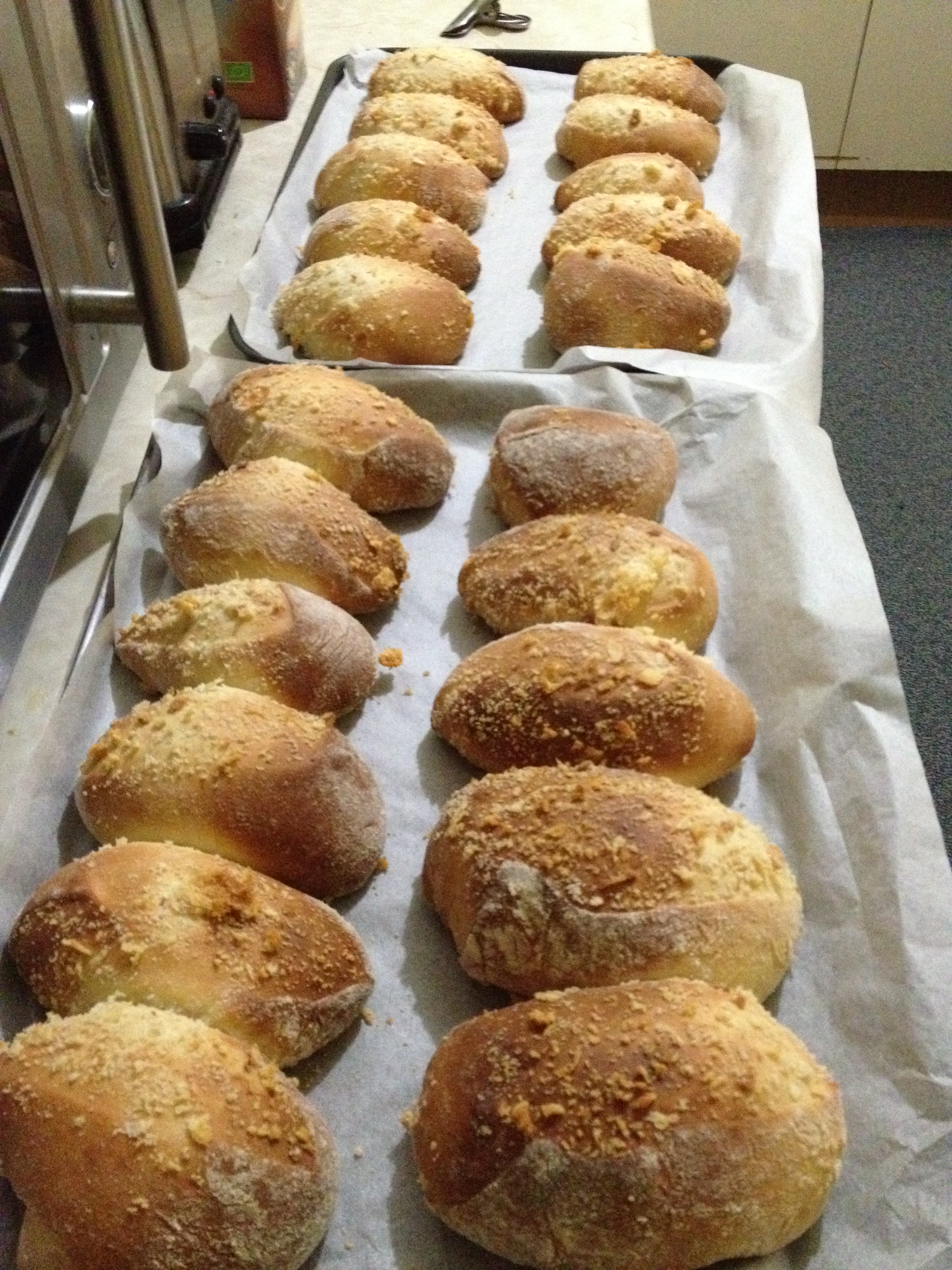
After following the baking instructions and making the bread rolls, I must admit, I was a bit worried again.  It might’ve have looked right as proofing dough but I always worry that I’m too heavy handed with anything I bake!  With a lot of whispered prayers I popped the trays into to oven and waited (impatiently) for 15 minutes until the timer pinged to tell me the rolls were ready.  They looked gorgeous and they tasted even better.  They finally tasted like the pan de sal I remember from the Philippines!

And, yes, I am very, very please!

Yelly Eats

Comfort food for dindins

It’s been quite the tough week, this week.  I’ve got a lot on my plate in terms of the day job.  So it was fitting that today, of all days, I cooked adobo for dinner.   Nothing fancy.  Just adobo, rice and braised sliced greens in a bowl.  I had prepped the adobo earlier and it had been marinating for a few days in the freezer.  I brought it down a couple of days ago so that it could thaw in the fridge until I decided to cook it.  There is nothing better than making a dish that reminds you of home when you’ve had a relatively rough day.

Yum!


Yelly Eats

Finally! Kare-kare!

Kare-kare (pronounced kah-reh-kah-reh) is a stew made from peanut sauce with vegetables (string beans, aubergines and white pakchoi), stewed oxtail, beef, and occasionally offal or tripe. Meat variants may include goat meat or (rarely) chicken. It is eaten with steamed rice and served with bagoong (shrimp paste) and patis (fish sauce).  The bagoong and fish sauce is used to season it according to the diner’s taste.

I’ve been craving this for absolutely ages.  My mom makes the absolute best and she does everything completely from scratch.  She grinds the peanuts for the peanut sauce and pounds toasted rice (into powedered submission) to thicken the stew.  She uses tripe, but since the kind of tripe she uses is a bit tricky to find, I resolved to find oxtail which Mom says will work just as well.

And, I finally managed to cook kare-kare today.  It’s not quite as nice as Mom’s yet (I tried a shortcut that I read on someone’s blog and used glutinous rice flour instead of actual rice grains and used peanut butter instead of grinding my own peanuts and the texture wasn’t quite there.  Next time I shall use rice instead of the flour.) but I plan to practice some more so that I can perfect it too!  It was smelling exactly like my Mom’s kare-kare and that was good enough for me today.

It was warm enough at lunch today that I could imagine that I was at home (I was sitting on the couch really, watching the Wimbledon finals) eating kare-kare.  I even had the prerequisite bagoong to make it really authentic (I was missing the banana heart that’s usually included but that didn’t bother me too!  And let me tell you, after not having kare-kare for nearly three years, it was absolute bliss!

Yelly Eats

Ah-doh-boh!!!

Adobo is Spanish for sauce or seasoning or marinade and is widely used in Latin American cuisine.  It is also defined as a sauce or paste made from a variety of ingredients that may include chillies, salt, vinegar, garlic, and herbs.  There are also dry adobos which are spice rubs for meat, fish or poultry.

Adobo is very definitely the Philippine’s national dish.  Everyone has a take  on how it’s made, every Filipino who knows how to cook it, has their own version, their own set of ingredients.  There are versions with vinegar, versions with coconut milk, versions with pineapple juice, versions with boiled egg, versions with bay leaf.  There are so many ways of adjusting (and readjusting) the ratio of soy sauce to vinegar, some people love it really garlicky, some people want only a smidgen of garlic in it.  Some like it really sour, some really salty, some really sweet and some…somewhere in the middle of all of this. Some people love pork adobo, while some people will say chicken adobo is always best.  When it’s a national dish, there are a million permutations.  Maybe as many as there are Filipino households in the world!

This is my take on adobo.  I’ve tried it with chicken and pork and it seems to work really well.  So I’m going to brave the big bad world wide web, and put forward my recipe!  If you’d like to try it, let me know how it works out for you please! 🙂  I’d really love for you to let me know what it was like!

Ingredients

  • 1 kilo of pork or chicken
  • 5 tablespoons of soy sauce + 1 tablespoon for cooking
  • 2 1/2 tablespoons of vinegar + 1 teaspoon for cooking
  • 3 large cloves of garlic crushed (or 3 teaspoons of garlic granules)
  • 1 1/2 tablespoons of sugar
  • 2 bay leaves
  • 1 tablespoon of whole pepper corns (or 1 heaping teaspoon ground pepper)
  • 1 meat stock cube (chicken or pork, whichever meat you’re cooking)
  • 1 tablespoon vegetable oil
  • 400 ml water

Directions:

  1. In a ziplock bag, combine the soy sauce and the vinegar and the garlic.  Add the meat (use belly pork if cooking pork as the fat makes the meat pieces more succulent and less dry, and if you are using chicken, wings, thighs and legs are the best parts to use because these chicken parts have more flavour) and marinade.  I like using a ziplock bag because I like to be able to “massage” the marinade into the meat.  The longer you marinade the meat the better, but a minimum of two hours (with a maximum of massaging!) will do.
  2. Heat the oil in a stir-fry pan and add the meat pieces, making sure that you keep the marinating liquid.  Brown the meat on all sides.  Once the meat has been browned, add the marinating liquid.  Add the soy sauce, vinegar, pepper corns (or ground pepper), sugar, the stock cube and water.  Make sure that the stock cube and the sugar are dissolved well and make sure that all the meat are covered by the marinating liquid.  Tear the bay leaves and add to the pan.  Allow the liquid to reach a rolling boil, turning the meat pieces occasionally.  Cover with a lid.
  3. Allow the liquid to simmer for 30 minutes, at which time it would have thickened slightly (without you adding anything to thicken it!).  This is my little step: after the 30 minutes are over, keep the lid on and keep the pot over the hot plate (if you’re using an electric stove, or over the ring, if you’re using a gas range) for 5 minutes without lifting the lid.
  4. Serve over boiled rice, and voila!  You have my version of adobo! 🙂

Photo credits:

Adobo by ISKAndals.com

Yelly Eats

Filipino Food

Luis of the London Foodie asked me a very interesting question.  He asked me to teach him about Philippine cuisine.  That was something that I had to think about long and hard.  I wanted to write something that would place the Philippines in an amazingly flattering light (this is why I don’t write about the Philippines as much because I tend to write about what things need to be changed and I don’t want to add to the negative press that the Philippines is getting already.  We have enough of it out there already!  The Philippines is a wonderful country with beautiful people and it is definitely worth a visit!) and make people want to seek out Filipino food.  But everything I know about Filipino cooking was learned at looking over my mum’s shoulder.  I am no food expert by any means.  I just know that when my mum cooks (cooks properly, from scratch, and not any of those nearly-ready meals), the house smells amazing and is an excellent preview of what the dinner will be.

Philippine cuisine is mostly like its neighbours, Malaysian, Thai, Indonesian, and Vietnamese.  It’s very southeast asian, but with the influence of the Spanish (they did occupy the Philippines for 300-odd years!), Chinese (I daresay nearly every Filipino has a percentage of Chinese blood in them) and American (and I’m not just talking the McDonalds and the KFCs).  Like our Asian neighbours, we are rice eaters (this is why the Spanish paellas was so natural for the Philippines to adapt, what with us being rice eaters and seafood being so accessible).

Filipino food is normally prepared by boiling, steaming or roasting.  Most of the food I’ve learned to cook is sauteed (my favourite is chicken afritada, which is chicken sauteed with garlic, onions and tomatoes—mmm yum!  I should write about it in my recipes section soon!).  But I think the sauteeing was brought about by the Spanish influence.  The southeast Asian and Chinese influence brought with them the use of soy sauce and fish sauce and the stir-fry method of cooking.  One of my favourite dishes is sinigang, which is comparable to the Thai tom yum, which has a tamarind soup base.  It is cooked using either pork (pork belly is best!), chicken, fish (we use a fish called bangus, or milk fish, which is similar to the seabass.  some of my friends who live overseas use salmon) or beef.  It has augbergines, white radish, long beans, kang kong (you can buy this type of greens at asian supermarkets, it’s called ung choi), onions, tomatoes and a few chillis (depends on how hot you want your sinigang to be).  Optional ingredients include taro, okra and winged beans.  It’s a one-pot dish that you eat with rice.  At our house, we always season it to individual taste with fish sauce.

One of the more popular Filipino dishes is called adobo, which can be cooked using chicken or pork or the combination of.  There are a myriad variations of the adobo recipe because everyone has their take on how the spices should be blended together.  Other people will say that the meat is boiled in a mixture of soy sauce, vinegar, sugar, garlic and pepper corns, other people will say that the meat has to be grilled to add more flavour, other people almost braise the meat.  There are debates about the inclusion of boiled eggs, the use of coconut cream, and the use of the bay leaf.  I think like any national dish, everyone has their version of how it’s cooked.

Our desserts are amazing!  My father makes this glutinous rice cake called suman sa lihiya.  It’s made by mixing glutinous rice with food grade lye and this is wrapped in banana leaf and boiled until cooked.  It takes hours to make, what with the wrapping of the rice and the cooking.  When it is finally cooked, the rice is shiny and sticky and it takes on a greenish tint from the banana leaf.  It is served with a sweet-sticky coconut cream sauce called latik (which my mom makes and it is DELICIOUS!).  Sometimes (when my mom can be bothered, as it is a LONG process), it is served with toasted coconut shreds.  We also have a variety of puto and bibingka which is are varieties of rice cakes made from rice flour.

One of my favourite desserts is called turon.  A turon is about one or two slices of the saba variety of banana (similar to the plantain), rolled in sugar, wrapped in spring roll wrapper (it’s just occured to me that I can probably try using filo pastry–ooooh! something to try next time, eh?) and deep fried until the wrapper is golden brown and fried to a crisp.  To make it a little more indulgent and fragrant, one or two slivers of jackfruit is added to each turon.

I think there are a few Filipino restaurants in Earls Court in London.  I’ve never been to any of them.  In fact the only time I’ve ever been near Earls Court since moving to England was going to the V&A Museum on Exhibition Road.  I know!  I was only a stone’s throw away but we had an itinerary to follow at the time.  Also, sometimes I worry that the food might not be as good as my mum’s or my aunts’ cooking.  I didn’t want to be disappointed.  I will venture out sometime…sooner rather than later I hope.  I will go there one day.  After all, one must love one’s own! 🙂

**Photocredits:
Sinigang by kurizeru06 from Photobucket
Adobo by ISKAndals.com
Turon by allfavoriterecipe.com

Yelly Eats

A Working Girl’s Mapo Tofu Don

I started writing this entry with the words “When I think of home…” and started laughing.  Because in my head I started singing “…I think of a place where there’s love overflowing…”  If you don’t know the song I’m singing, well, your musical education isn’t as good as you think it is.  Well, either that or you weren’t alive in the 80’s (that’s when I first saw it, on RPN9 on a Saturday evening), or you’ve never heard of The Wiz.  It’s the Michael Jackson-Diana Ross adaptation of The Wizard of Oz.

And as usual, I digress!

I miss home and the little comforts that are so close (that or I can easily jump into the family car–our trusty Revo–and drive to where I want to go get things).  I miss having nail bars everywhere, I miss Ditas of David’s Salon in SM Fairview who does my hair perfectly, I miss Starbucks and the occasional green tea latte frap, I miss tocino, Purefoods corned beef.  I miss eating at the eat-all-you-can lunches (and dinners) of Saisaki (although, it may not be the same now), I miss the shawarma place in Fairlane (also in Fairview), I miss Mercury Drug (because buying things over the counter is sometimes quicker).  I miss my Tita Rescy’s cafe called Indulgence on…(argh! I can’t remember!) Perea.  I miss Ineng’s barbecue and I miss Teriyaki Boy!  Apart from their sushi, I miss their mapo tofu don.

Mapo tofu was one of the first dishes that I learned to replicate when I moved to the UK.  I loved it a lot (I think it loved me too, because I KNOW I gained weight because I ate a lot of mapo tofu don from Teriyaki Boy) and missed it so much that I looked for a recipe and searched for ingredients.  I can now, and I say this with absolute confidence, whip up mapo tofu in minutes.  I now have what I call the working girl’s version of this wonderful tofu-pork-black bean sauce dish.  It’s quick, and really easy.  I also like to think that it’s really healthy (because of the tofu! :)).  And all the ingredients are things you can get at the supermarket!

Ingredients:
Serves 4 people

  • 1 block soft tofu (about 350g), drained and diced
  • 3 tablespoons vegetable oil
  • 500g minced pork
  • 1 Blue Dragon black bean stirfry sauce packet
  • 2-3 spring onions, sliced into thin diagonals and separate the white sections from the green leafier bits
  • 1 packet coriander chopped finely
  • 1-2 teaspoons chili oil (depending on how hot you want it, you can include the chili paste at the bottom of the jar)
  • 1 pork stock cube (I use Knorr)
  • 2 teaspoons light soy sauce
  • Salt to taste

Directions:

  1. Heat oil in the pan and brown minced pork.  Add blackbean stirfry sauce and pork stock cube.  Allow to simmer for 3 minutes.
  2. Add chili oil (and paste, if you want it hot, hot, hot!) and allow to simmer for 3 minutes.
  3. Add the chopped white sections fo the spring onions, the soy sauce and two-thirds of the coriander.  Add salt to taste (I like to make it salty, according to my taste as the tofu hasn’t been added to the pork mince at this stage).
  4. Add the diced tofu and mix gently, making sure the tofu isn’t mashed but is distributed well.  Allow to simmer for 5 mins.
  5. Serve over a bowl of steamed rice.