Yelly Eats

Lamb kofta kebabs

I am certainly fond of my takeaways – even while I lived in the Philippines, takeaways were a regular occurrence in our household.  I may be wrong, but we seemed to have a better variety of takeaways available for home delivery.  One of my favourites were barbecued squid, stuffed grilled fish and spit-roasted suckling pig with amazingly crispy skin.  Yes, you phoned in and they delivered it to your home wrapped up in a banaa leaf (properly packaged in aluminum foil and a takeaway box of some fashion, of course!)!  Is it any wonder I miss Philippine food?

Tonight I made lamb kofta kebabs and paired it with roosterkoek breads using Andy Bates’ recipe.  It’s a lovely way to make one’s own takeaway-style food with the comfort of knowing exactly what’s in the food!  I’d like to share with you my recipe for the lamb kebab.  It’s my version of a kebab recipe that I found in a book called The Takeaway Secret.  I’ve modified the recipe so that it’s made up of ingredients that I’ve found in my cupboard!

Ingredients:

  • 500g lamb mince
  • 1 heaped teaspoon garlic powder (or 1 large clove of garlic, very finely chopped)
  • 1 medium onion finely chopped (or 2 heaped teaspooons onion powder)
  • 1 heaped teaspoon chilli flakes (or 2 red finger chilli peppers very finely chopped)
  • 1/4 teaspoon allspice
  • 1/2 teaspoon paprika
  • 1/2 teaspoon cumin
  • 1 teaspoon salt
  • 2 tablespoon finely chopped coriander (including stalks)
  • 1/4 teaspoon ground black pepper
  • 1 egg

Directions:

  1. In a bowl, combine all ingredients.  Mix the ingredients but try not to overwork the mince too much.  Allow to marinade for at least 2 hours, or overnight if possible.  TIP: You can adjust salt to taste, increasing or reducing the amount by half a teaspoon.  I haven’t tried this recipe using beef, but I think if you’re using beef, make sure you DON’T use lean or extra lean beef mince because you need the fat in the kebabs so that they don’t dry out.
  2. Divide the koftas into 9-12 pieces.  Shape the pieces into cigar-shaped pieces and flatten slightly.
  3. These koftas can be fried in a griddle pan or frying pan with a little oil.  My favourite way of cooking them is under a grill though, set to a medium-high heat.  Cook the kofta pieces (whether fried or grilled) for 6-8 minutes each side, or until the meat is cooked through and golden.
  4. Serve with pitta, salad and a tzatziki sauce if you like.  Will also work with hummus!
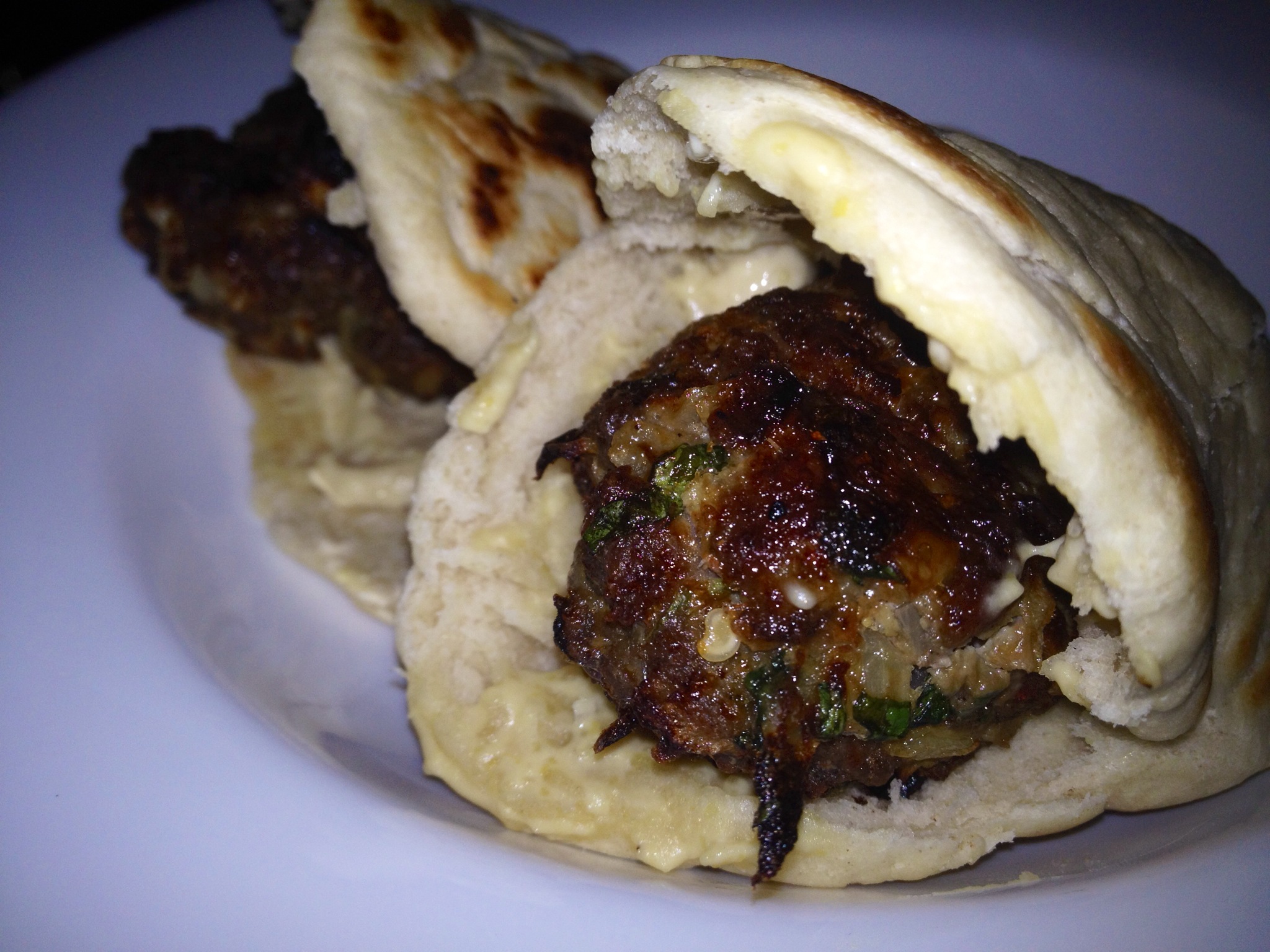
Kofta kebabs

Yelly Eats

My ode to The Duffin

After the obvious success of the cronut™ (aka croissant-donut, dossant, doissant, dosant, frissant, faux-nut), people wanted to contribute to the rising pastry hybrid trend by inventing delicious sugary-doughy mutations.  Apart from the trademarked cronut, no one else, to my knowledge, attempted to copyright any of the hybrid pastry creation names.

Until Starbucks, through Rich Products, did just that.  Early this month, Starbucks announced that, after sitting down with their bakers to discuss how to take their muffins one step further, they came up with the duffin.  I found out about this from a tweet from Bea’s of Bloomsbury that I read on 5 October.  I felt outraged on Bea’s behalf because earlier this year, around July, I had gone to the St Paul’s branch of Bea’s of Bloomsbury specifically to try the duffin.  I even tweeted about it!  I was even more incensed to find out earlier this week that Starbucks’ pastry products provider Rich Products copyrighted the name “duffin”.  They claim to have done extensive research about the name.  That surprises me because if you type “duffin” on Google, one of the top search results is Bea’s product.  Starbucks and Rich Products have magnanimously declared that they wouldn’t stop Bea from selling her duffins.  Gee thanks Starbucks, how generous of you, considering that Bea had her duffin recipe in a book that was released in September 2011!

In a tribute to Bea’s duffin, I baked my own batch of duffins from a recipe that was posted on the Channel 5 website.  The recipe was reprinted from Bea’s book Tea with Bea with Bea’s permission – How do you make a duffin?

Have a go at making this!  The recipe is amazingly easy to follow and the lovely duffins are ever so rich and decadently delicious!

The Duffin

Yelly Eats

The Adobo Challenge

Adobo is arguably the national dish of the Philippines.  Each family will have their own take on the adobo recipe that is passed down through generations.  I wrote about it once, and shared the recipe.  But I thought I’d post it again because I’m determined to introduce more people to Philippine cuisine.  One of my favourite TV moments was on The Voice, when Filipino soul singer and semi-finalist Joseph Apostol brought Sir Tom Jones adobo that his mother cooked!

Filipino flavour combinations are an amazing fusion of East and West because the wonderful amalgamation of our Southeast Asian and Chinese food traditions and the Spanish flavour influences (the Philippines was a Spanish colony for over 330 years!).  The best introduction to Filipino cuisine is adobo because it is a marinading meat dish.  It is best eaten over a bowl of boiled rice but is also a good sandwich filling.  The recipe is versatile and you can use either chicken or pork.  And believe you me, it is the easiest thing to prepare!

I challenge you to cook adobo!  I’ve tried to be very detailed in writing the cooking directions and I’ve posted as many pictures as I possibly could.  This is one of the most basic versions of adobo.  Try the recipe and let me know how you get on!  Tweet a photo of your attempt at my adobo recipe to @yellywelly with your blog address or your Twitter username and I’ll  post your photo on my blog!  Please make sure you use the hashtag #adobochallenge.  Or if you don’t have Twitter, leave your details on my message board, tell me you’ve got an adobo photo to send me and I’ll reply to you so you can send me your photo! 🙂

To make ADOBO you will need:

Adobo and greens650g of pork belly or pork shoulder steaks cut into cubes or chicken thighs
5 tablespoons of soy sauce + 2 tablespoons for cooking
2 1/2 tablespoons of vinegar + 1 tablespoon for cooking
3 large cloves of garlic crushed (or 3 teaspoons of garlic granules)
1 1/2 tablespoons of sugar + 1 tablespoon for cooking
2 bay leaves
1 tablespoon of whole pepper corns (or 1 heaping teaspoon ground pepper)
1 meat stock cube (chicken or pork, whichever meat you’re cooking) – optional
1 tablespoon vegetable oil
400 ml water

Directions:
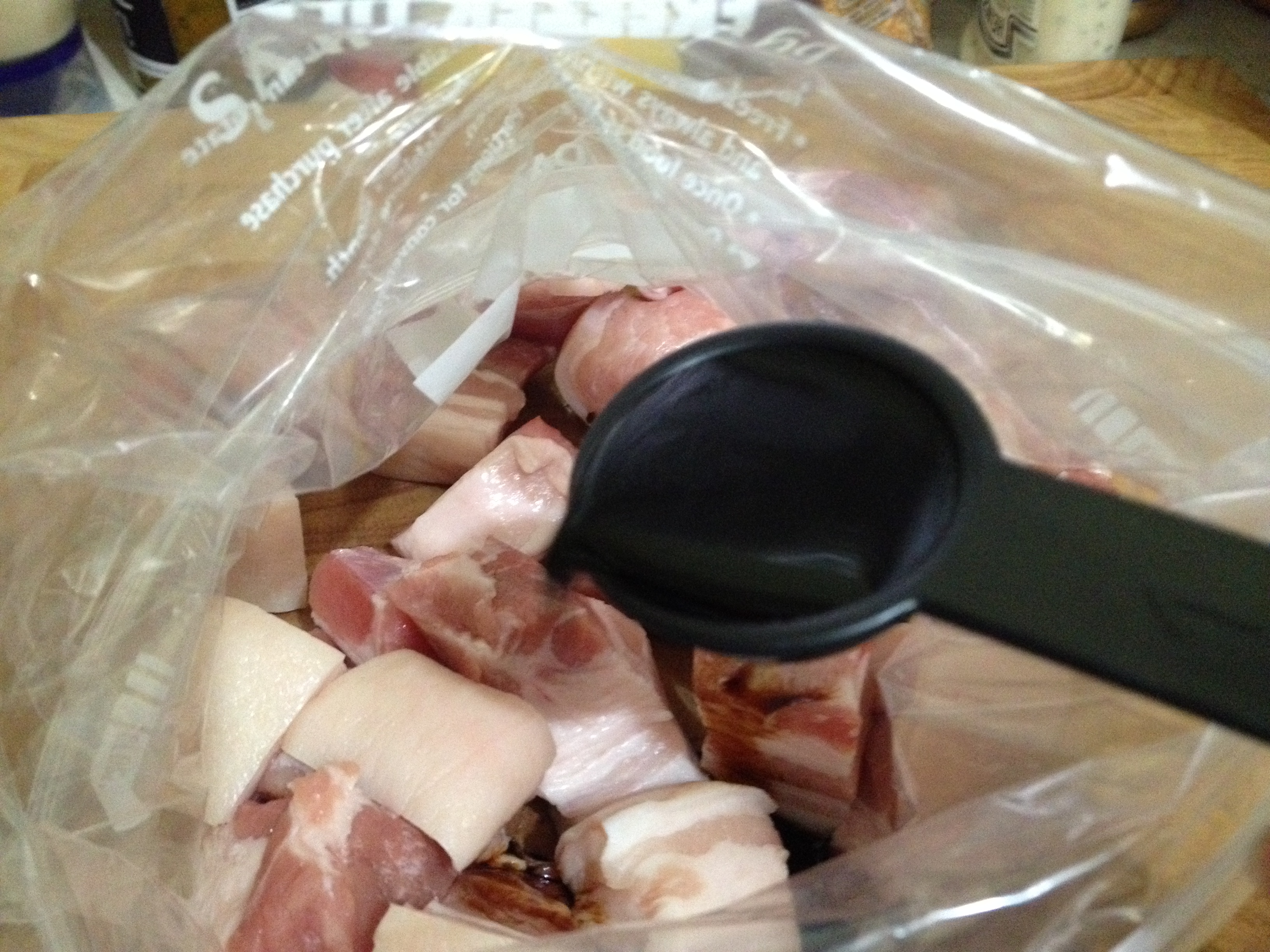
When making my adobo, I like using a ziplock bag because using a ziplock bag allows me to “massage” the marinade into the meat.  Place the meat in the ziplock bag.

Adobo1

Add the the soy sauce  to the meat.

Adobo2

Add the vinegar.

Adobo3

Add the pepper and sugar to the meat.

IMG_3433

In a mortar and pestle, make sure the  garlic is ground to a paste and add to the meat and other marinating ingredients.

IMG_3434
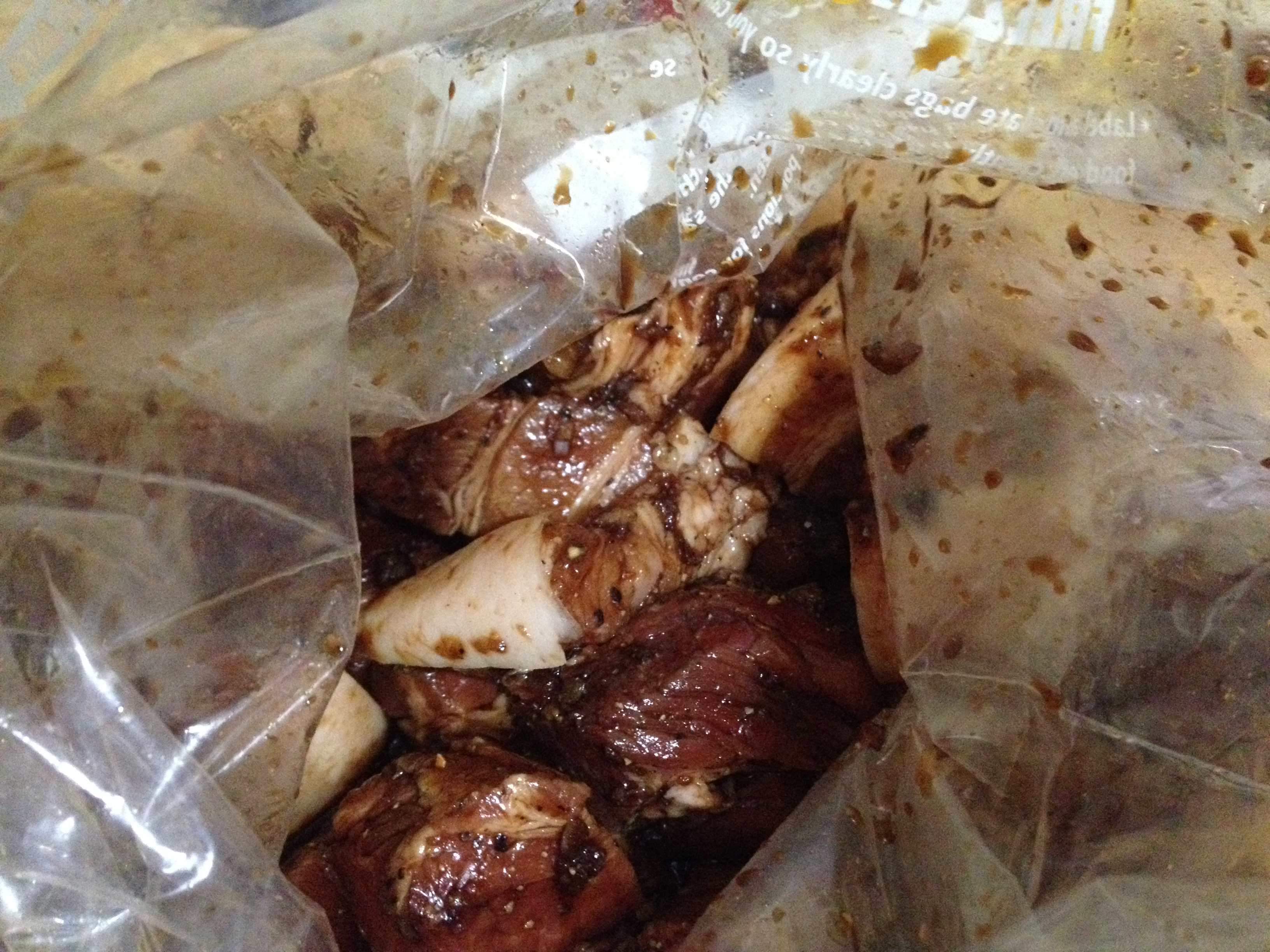
The longer you marinade the meat the better, but a minimum of two hours (with a maximum of massaging!) will do.

Adobo6
Heat the oil in a stir-fry pan and add the meat pieces, making sure that you keep the marinating liquid.  Brown the meat on all sides.  Once the meat has been browned, add the marinating liquid.  Add the soy sauce, vinegar, sugar, the stock cube and water.  Make sure that the stock cube and the sugar are dissolved well and make sure that all the meat are covered by the marinating liquid.  Cook for about 30-45 minutes or until the fat (if cooking pork) has rendered a little bit.

IMG_3443

Tear the bay leaves and add to the pan.  Allow the liquid to reach a rolling boil, turning the meat pieces occasionally.  Cover with a lid.

Adobo8
Allow the liquid to simmer for 30 minutes, at which time it would have thickened slightly (without you adding anything to thicken it!).

Adobo9

This is my little step: after the 30 minutes are over, keep the lid on and keep the pot over the hot plate (if you’re using an electric stove, or over the ring, if you’re using a gas range) for 5 minutes without lifting the lid.
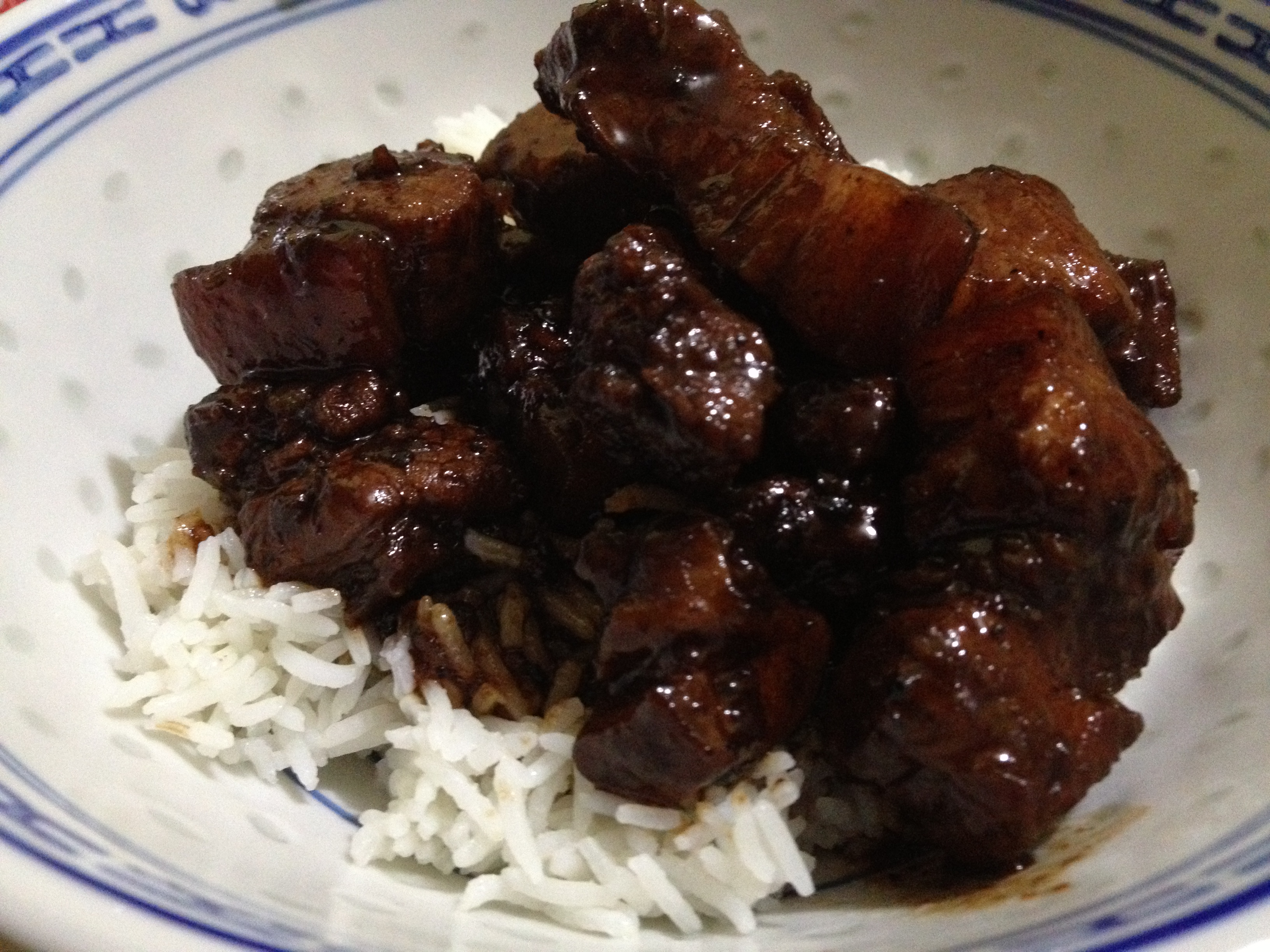
Serve over boiled rice, and voila!  You have my version of adobo! 🙂

Adobo10

Yelly Eats

Baking pan de sal!

The pan de sal is ubiquitous (HUGE word alert!) in the Philippines.  It is sold in every corner bakery, in every panaderia, in various shapes and sizes.  It is bread that has been enjoyed in the Philippines for centuries, as apparently, it was introduced by the Spanish conquistadores in the 16th century.

Since moving to the UK, I have been looking for a British equivalent and there have been near misses, but not quite like the real thing.  Pan de sal, when translated from Spanish, means salt bread.  Funnily, it is more sweet than savoury.   I wrote about baking pan de sal last year and since then I’ve been trying out various recipes from online sources.  Now, though, I can finally say that I’ve perfected my version of the Philippine bread staple.  I’ve tried several recipes and have now found that putting the recipes together in a system that works for me does really work.  Here’s my take on the pan de sal:

Ingredients:

  • 500g strong bread flour (can also be substituted with whole wheat or gluten-free flour)
  • 1 teaspoon baking powder
  • 1 teaspoon salt
  • 75g butter
  • 150ml milk (full fat, semi-skimmed or skim milk)
  • 70g sugar
  • 1 packet active dry yeast (or 7g)
  • 1 egg
  • 15ml vegetable oil
  • 1 cup bread crumbs (or dry polenta/corn meal)

Directions:

  1. In a mixing bowl, combine the flour, baking powder and salt.  Mix until well combined (I use a balloon whisk to do this because I find that this mixes the ingredients quickly) and set aside.
  2. In a sauce pan, heat the milk over low heat.  Add the butter and sugar and mix until the butter and sugar are melted.  Remove from the heat and allow to cool until lukewarm in temperature.  Once lukewarm, add the yeast and stir until the yeast is dissolved into the milk mixture.
  3. Add the egg and oil to the flour mixture and mix well.  Mix the milk and butter mixture with the flour until a wet dough forms.
  4. Turn out the dough onto a floured surface and knead until the dough is smooth and elastic.  If you’re kneading by hand, this should take about 8-10 minutes.  Steps 3 and 4 can be done in a free-standing mixer with a dough hook attachment with step 3 in the lowest speed setting and turning up the mixer to the next speed to add the butter and milk mixture and knead the dough for about 5 minutes.
  5. Place the dough in an oiled bowl and allow to proof for an hour or until the dough has risen to double its size.
  6. After proofing, punch the dough to deflate it and turn it out onto a floured surface.  Knead the dough by hand for 5 minutes then form it into a ball.  Cut the dough in half using a pastry cutter or a knife.  Form the dough pieces into a ball and repeat until you have 8 dough balls.  Once you have 8 dough balls, cut each in half and roll in bread crumbs.  This makes 16 large rolls but the recipe can make up to 20 rolls.
  7. Line a baking pan with parchment paper and place the dough pieces cut side up on the pan.  Allow for enough space for the dough ball halves to expand.  Allow to proof for another hour or until it doubles in size.
  8. Preheat the oven to 190ºC (375ºF).  If using a fan oven preheat to about 160ºC (320ºF).  Place the baking pan in the oven and bake the dough for 15 minutes.

Pan de sal

Yelly Eats

Fig squares

I’ve been under the weather for quite a while and it’s been a very difficult week.  I was admitted to hospital overnight on Monday night for observation.  But they didn’t find anything, so that, in itself, is a relief.  I still have my headache though, which is a bit worrying.

My favourite thing to do when trying to comfort myself is baking.  Sometimes how I feel affects my baking results, but more often than not, I find comfort in the baking process.  I felt the need to bake yesterday and I had dried figs in my cupboard that needed using.  I intended to use the dried figs to make fig bars ala Fig Newtons but I wasn’t sure if I had all the ingredients.  So my fig squares were born.

They are lovely and squidgy and crumbly at the same time.  They remind me slightly of Fig Newtons which made me excited to go home because I’m sure my mum would love them (she absolutely loves Fig Newtons!).

I’m being very careful with my sugars so I’ve only had one tiny piece (yes, really) of the fig squares.  But I’m happy to share the love, so here’s the recipe!

Ingredients:

  • 150g all purpose flour
  • 1 teaspoon baking powder
  • 1/4 teaspoon salt
  • 2 eggs
  • 175g brown sugar
  • 125g unsalted butter, softened
  • 250g dried figs, chopped

Directions:

  1. Preheat the oven to 170°C.
  2. In a mixing bowl, mix flour, salt and baking powder together with a balloon whisk until well combined.
  3. In separate a mixing bowl (am using a free standing mixer but you can also do this by hand with a balloon whisk), combine softened butter and sugars and beat until the mixture is smooth and fluffy (about 4 minutes by mixer and about 7-10 minutes if beating by hand).  Add the eggs one at a time, making sure that the egg is well-combined before adding the next one.  Add the flour mixture in quarters.  It will look like you don’t have enough batter but it will be fine, I promise!  Add the chopped figs and mix until everything is well-distributed.
  4. Spread mixture in a greased 17.5cm x 26.5cm (or thereabouts) pan lined with baking parchment (I learned that lining the baking pan with parchment is good because it makes it easy to release the cake from the pan) and bake for 30-35 minutes or until a toothpick inserted comes out clean.  This recipe makes up to 24 squares.

This recipe will also work with prunes, dates and raisins.  If using raisins, it would be best to soak the same amount in about 75ml of water overnight until the raisins are plumped up.  If you want a boozy version of the fruit squares, soak the fruit in about 30ml of either brandy or rum and add the fruit (with the brandy or rum) to the mixture.

Figbars

Yelly Eats

The Breakfast Club tribute pancakes

It’s supposed to be Spring.  The sun is supposed to be out.  The weather should be warming up.  But Mother Nature didn’t seem to get the memo.  It is snowing almost everywhere in the UK today.

I’ve been craving The Breakfast Club‘s HamSoEggcited for some reason.  I think it was because of the weather and the fact that I wasn’t feeling very well (I’ve got a bad cold, if anyone’s interested in offering tea and sympathy!).  In my head, HamSoEggcited would cure all my ills.  I had visions of lovely fluffy pancakes, melting cheese sandwiched in ham slices and a perfectly fried sunny side up egg with the yolk all gooey and runny!

HamSoEggcited - The Breakfast Club

But because London wasn’t exactly a hop, skip and jump away, I thought I’d try to replicate it in my tiny kitchen.  I found a great recipe for fluffy pancakes recently and tweaked it so that the pancakes were how I wanted them to be.  I had gammon ham in the fridge and cheese that needed using up so I set about recreating the sweet-savoury pancake stack.

My recipe for fluffy pancakes is below:

Ingredients:Fluffy pancakes

  • 135g self-raising flour
  • 1 tsp baking powder
  • ½ tsp salt
  • 3 tbsp caster sugar
  • 150ml milk
  • 1 large egg, lightly beaten
  • 30ml melted butter or olive oil
  • butter to cook pancakes

Directions:

  1. Combine the flour, baking powder, salt and sugar in a large bowl with a balloon whisk (I love using a balloon whisk to mix dry ingredients because it does it really quickly and really well!).
  2. In a jug, whisk the egg and milk together.  Then add the olive oil.
  3. Combine the flour mixture and the egg-milk mixture and beat until you have a smooth batter.  If there are any lumps, this should disappear soon with a little more mixing.  Let the batter stand for a few minutes.
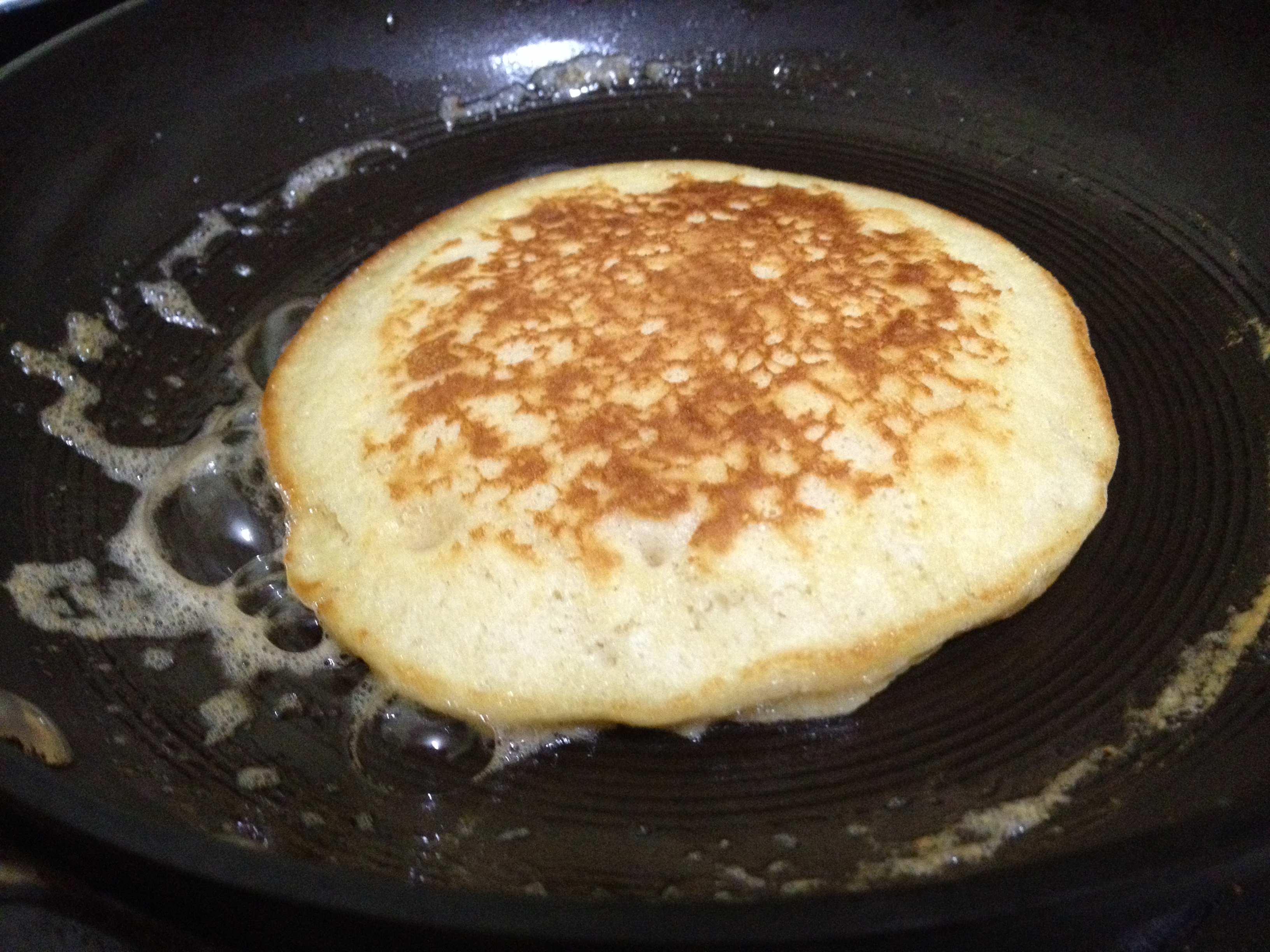
  4. Heat a non-stick frying pan over medium heat and add a knob of butter and swivel the butter around to coat the pan, until all the butter has melted.  Add a ladle of the batter to the pan.  The batter will be thick, but don’t worry because this is how the batter should be.  Wait for the pancake to bubble and for the bubbles to burst.  Loosen the edges with a fish slice and flip over.  Cook until both sides are slightly golden brown.  The pancake should rise to about 1 cm thick.
  5. Repeat until all the batter is used up.  This makes 4 large pancakes.  I know that might not sound like much but a stack of 2 pancakes are more than generous for one person!
  6. Serve with lashings of syrup of your choice, and extra butter if you are so inclined!

To make the HamSoExcited, I kept each pancake warm in a low oven and each time I made a pancake, I stacked it with a folded piece of gammon with a slice of cheese inside (the gammon).  I did a stack of 3 pancakes and doused the pancakes (VERY liberally) with golden syrup (because I’d run out of maple syrup).  Leaving the pancakes in the oven while I cooked the eggs gave the pancakes a little crunch.  When I placed the fried egg over the pancake stack I had to take a photo because it was soooooo pretty.  Probably not as pretty as The Breakfast Club’s HamSoEggcited but it was close enough, I thought.  It certainly tasted like it!

tribute pancakes

I posted the photo on Instagram and the people managing The Breakfast Club’s instagram account thought it was a pretty impressive effort!

TheBrekkyClubComment

Yelly Eats

Coffee and walnut brownies

I am doing something yummy for money!

Our office is doing a week-long bake sale to raise money for Comic Relief.  Comic Relief is a charity based in the UK that was set up in 1985 that aims to raise money to tackle the root causes of poverty and social injustice.  The money that gets raised each year helps so many people and I enjoy doing my bit to contribute, albeit in a very small way.

I’m going to bring coffee and walnut brownies tomorrow.  It’s still chocolate but it’s got a distinct coffee taste that cuts through the chocolate quite nicely, or at least, I think so!  I love the recipe enough to share it.  I think this would be great with a cup of milky tea or, what else, coffee!  If you try the recipe, please tell me what you think!  I’d love the feedback.

Ingredients:Coffee and walnut brownies cooling
200g dark chocolate, roughly chopped
175g butter
25g instant coffee granules
200g caster sugar
125g brown sugar
150g plain flour
100g walnuts, roughly chopped
3 eggs

Directions:

  1. Preheat oven to 170°C.
  2. Prepare a baking tray by greasing and lining with parchment paper and set aside.  I learned that when you grease the baking tin that you plan to use, it’s a good thing to also grease the parchment paper you line the baking tin with.  It prevents the parchment from sticking to the cakes and makes for easy removal.
  3. In a bowl, mix flour and choppped walnuts together, making sure that the walnuts are completely coated in flour.
  4. Place chocolate, butter and instant coffee granules in a heat-proof bowl over a sauce pan of simmering water.  Leave until melted completely but making sure you stir once or twice to make sure that everything is combined properly.  Remove from the heat once everything is melted completely and well-incorporated.
  5. In a free-standing mixer (this can also be done by hand or a hand-held mixer), mix sugars and egg and beat until the mixture is smooth and fluffy-looking.  I read somewhere that this usually takes about 5 minutes, but what I look out for is a change in colour, the batter becomes a paler shade of what you when you started to cream the sugars.  Pour chocolate mixture slowly into egg and sugar mixture and mix until everything is well-combined.  Add the flour and walnut mixture and mix until the batter is thick and smooth.
  6. Spoon the mixture into the prepared baking tray and bake in the preheated oven for 30-35 minutes, until a skewer inserted comes out clean.  The top will look shiny and flaky.  Be careful not to over cook as the brownie can become hard and very chewy.
  7. This can make up to 24 squares, depending on how large your slices are.

Coffee and walnut brownies

Yelly Eats

Mango Love!

Presenting (finally) the recipe for Mango Love!

I created this recipe to enter the Emerald Street Cupcake Challenge.  While I didn’t make the shortlist (I was disappointed, but I knew my recipe was more tropical than American), the whole process of creating and designing a cupcake was a very enjoyable and very delicious one!

This lovely golden cupcake is offers you a burst of tropical mango sunshine.  The twists of lime in the sponge, frosting and mango jelly are added to bring out the mango flavour.  The cupcake is moist and full of fruity mango sweetness.  The mango flavour theme continues in its golden yellow frosting.  It is topped with a heart-shaped mango jelly piece.  This luscious burst of tropical sunshine during the cold winter months that will have you reaching for another…and another!

Cupcake Sponge:P2100839
90g sugar
50g butter, unsalted
1 egg
180g flour
1/2 tsp baking powder
1/2 tsp bicarbonate of soda
1/4 tsp salt
200g mango pulp
2 tbsp lime juice

Frosting:
300g icing sugar
80g butter
1 1/2 tbps lime juice
40g mango pulp

Mango jelly (for decoration, optional):
50ml hot water
80g mango pulp
1 tbsp lime juice
15g granulated sugar
1 packet gelatin

Directions:

  1. Preheat oven to 180°C
  2. In a bowl, mix flour, baking powder, bicarbonate of soda and salt until well combined with a balloon whisk and set aside.  In a small bowl, mix together the mango pulp and lime juice.  Set aside.
  3. In a stand mixer, cream butter and sugar until this becomes fluffly and light yellow in colour.  About 5 minutes.  Add egg and mix until mixture is creamy.
  4. Add the flour mixture and mix until a heavy batter forms.  Add the mango pulp into the batter and mix for 5 minutes until the mango pulp is distributed well.  You may have to scrape the sides and the bottom of the bowl to make sure everything is well combined.
  5. Spoon into a lined muffin tin.  Makes 8 – 10 cupcakes.  Bake for 18-20 minutes or until a toothpick inserted in the centre comes out clean.
  6. To make the frosting, cream butter and the icing sugar together.  Add mango pulp and lime juice until the mixture is creamy.  Pipe onto cooled cupcakes.
  7. To make mango jelly for decoration, mix hot water with 1 packet of gelatin until gelatin is dissolved, mix in the sugar, mango pulp and lime.  Allow to set (leave for about 4 hours for it to set properly) and cut into cubes or shapes and use to top frosted cupcake

This recipe makes 10-12 cup cakes.

Mango Love cupcakes

Yelly Eats

Easy-peasy cornbread V2!

I did a slow-cooked joint of pork on the weekend.  I haven’t used my dry rub recipe in ages and I thought it was time I did.  I dusted off the dry rub recipe and had a critical look at ingredients.  I did a little tweaking and the pork turned out even better than I remembered.  The barbecue sauce that was made out of the leftover barbecue rub tasted even better as well.

But the dry rub recipe wasn’t the only recipe that experienced a few tweaks.  When one does a slow roast with barbecue sauce, the best accompaniment is cornbread.  I looked at my original cornbread recipe and I thought the flavours needed enhancing.  The new recipe has a better sweet-salty balance and I love my cornbread slightly crumbly and this new tweak added the right amount of crumble to my cornbread.

Here’s the tweaked recipe:

Ingredients:Cornbread

  • 200g polenta (fine ground)
  • 150g all-purpose flour
  • 120g sugar
  • 2 teaspoons  baking powder
  • 2 teaspoons salt
  • 280ml buttermilk
  • 80ml vegetable oil
  • 1 large egg

Directions:

  1. Preheat oven to 200C.
  2. Prepare 12 x 7.5 pan by lining with baking paper and greasing with butter and set aside.
  3. Mix polenta, flour, sugar, baking powder and salt in a mixing bowl with a balloon whisk until well-combined.  Set aside.
  4. Beat egg, milk and vegetable oil together until well-combined.  Add to polenta mixture in 3 parts.  Once liquid mixture and dry mixture has been mixed together completely, allow to sit for 30 minutes so that polenta can absorb the liquid.
  5. Place in oven and cook for 20-22 minutes, or until a skewer inserted comes out clean.
  6. This recipe makes 18-20 squares.
Yelly Eats

Cooking it slow and low!

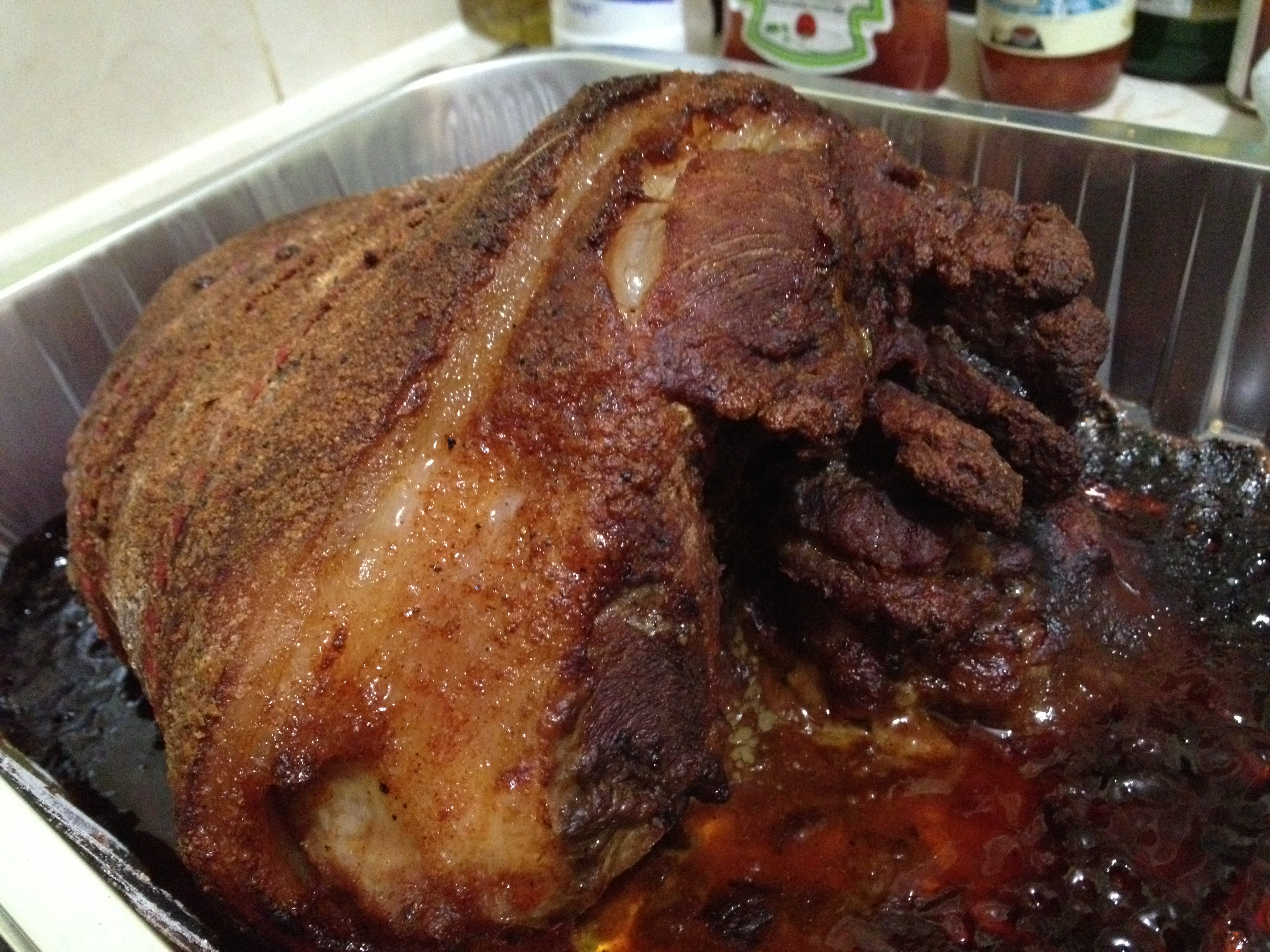
My favourite American food shows are Man vs Food and Diners, Drive-ins and Dives.  Mainly because it gives me a lot of cooking ideas.  I think these 2 shows are entirely to blame for a phase I went through over  a year ago.  Mind you, I’m really glad that I went through this phase because I learned how to cook meats using a dry rub and I have my own recipe for a dry rub now.  I also learned the benefits of cooking meats low and slow – cooking them at a low temperature (about 130°C – 150°C) very slowly (at least 5 hours!).  This is excellent proof that good (and very tasty) things come to those who are patient!

Tonight, I dusted off my dry rub recipe (which is based on the Kentucky dry rub recipe) and cooked the pork shoulder that I bought yesterday (pork shoulder cuts were 50% off so I couldn’t resist buying it–I am a willing slave to food bargains!).  The recipe below will work for meats weighing between 1.75 – 2 kilograms and will work with pork and beef.

Ingredients:SlowroastPork1

  • 2 tablespoon cornflour
  • 1-2 teaspoons chili powder
  • 2 teaspoons salt
  • 2 teaspoons paprika
  • 4 tablespoons sugar
  • 3/4 teaspoon crushed chicken bouillon cube
  • 1 teaspoon onion powder
  • 1 teaspoon garlic powder
  • 1 teaspoon cayenne pepper
  • 1/4 teaspoon cumin

Directions:

  1. In a bowl, mix all the ingredients together.  I find that mixing it with a balloon whisk helps mix it properly and more efficiently.  Set a fifth of the powder aside to make barbecue sauce.
  2. Rub as much of the dry rub as you can onto the meat.  You can cook the meat as soon as you’ve finished rubbing the dry rub onto it, or for better flavour, leave it wrapped in cling film overnight in the fridge.
  3. Place the meat in a roasting tin and cover with foil.  Cook the meat in an oven preheated to 200°C for 15 minutes.
  4. After 15 minutes, turn down the heat to 150°C.  Cook at 150 for 4 ½ hours.  For the last 30 minutes, turn up the oven to 200°C and remove the foil and cook the meat uncovered.
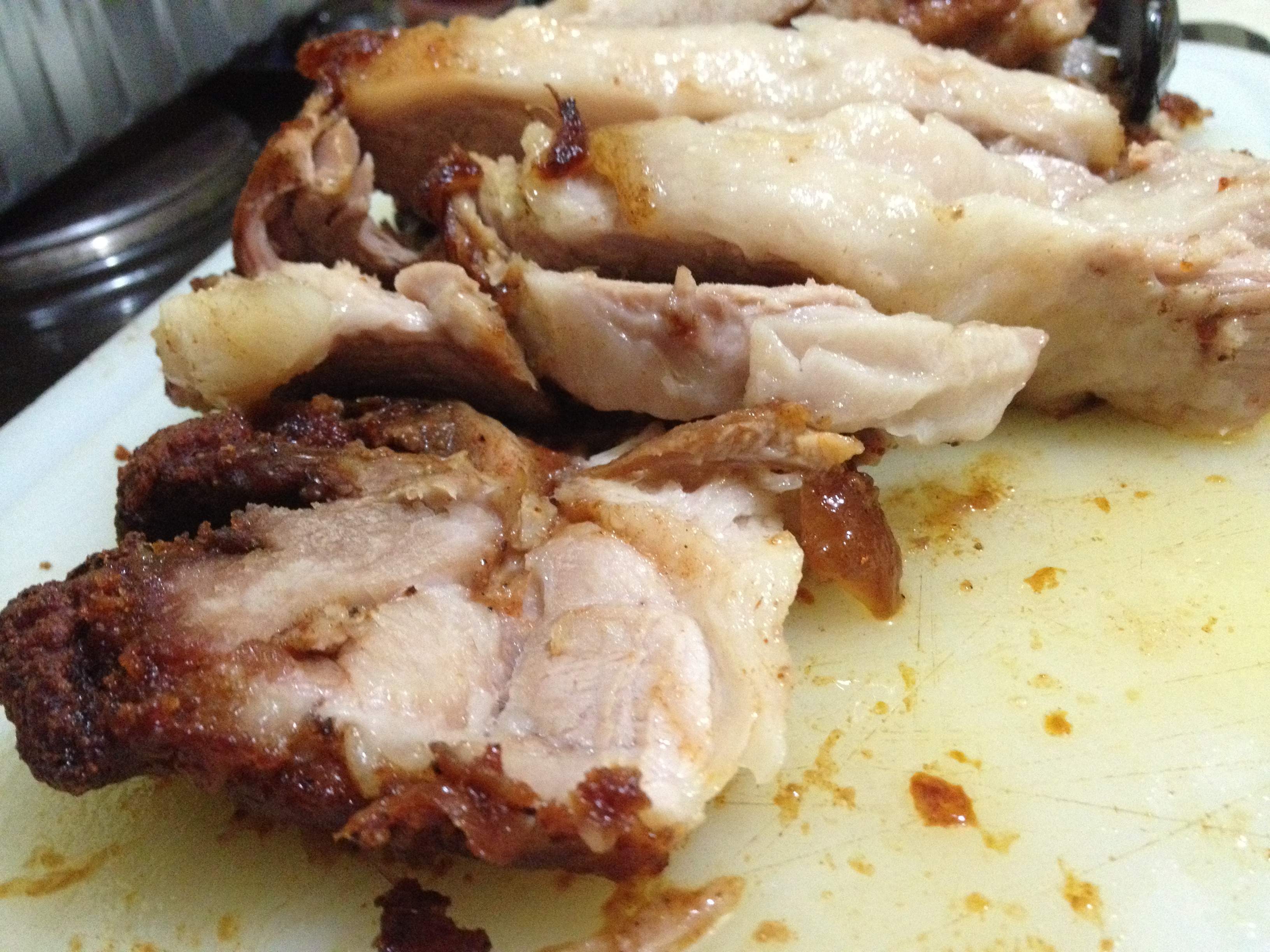
  5. Allow the meat to rest covered with foil for 20-30 minutes before slicing.

SlowroastPork2